


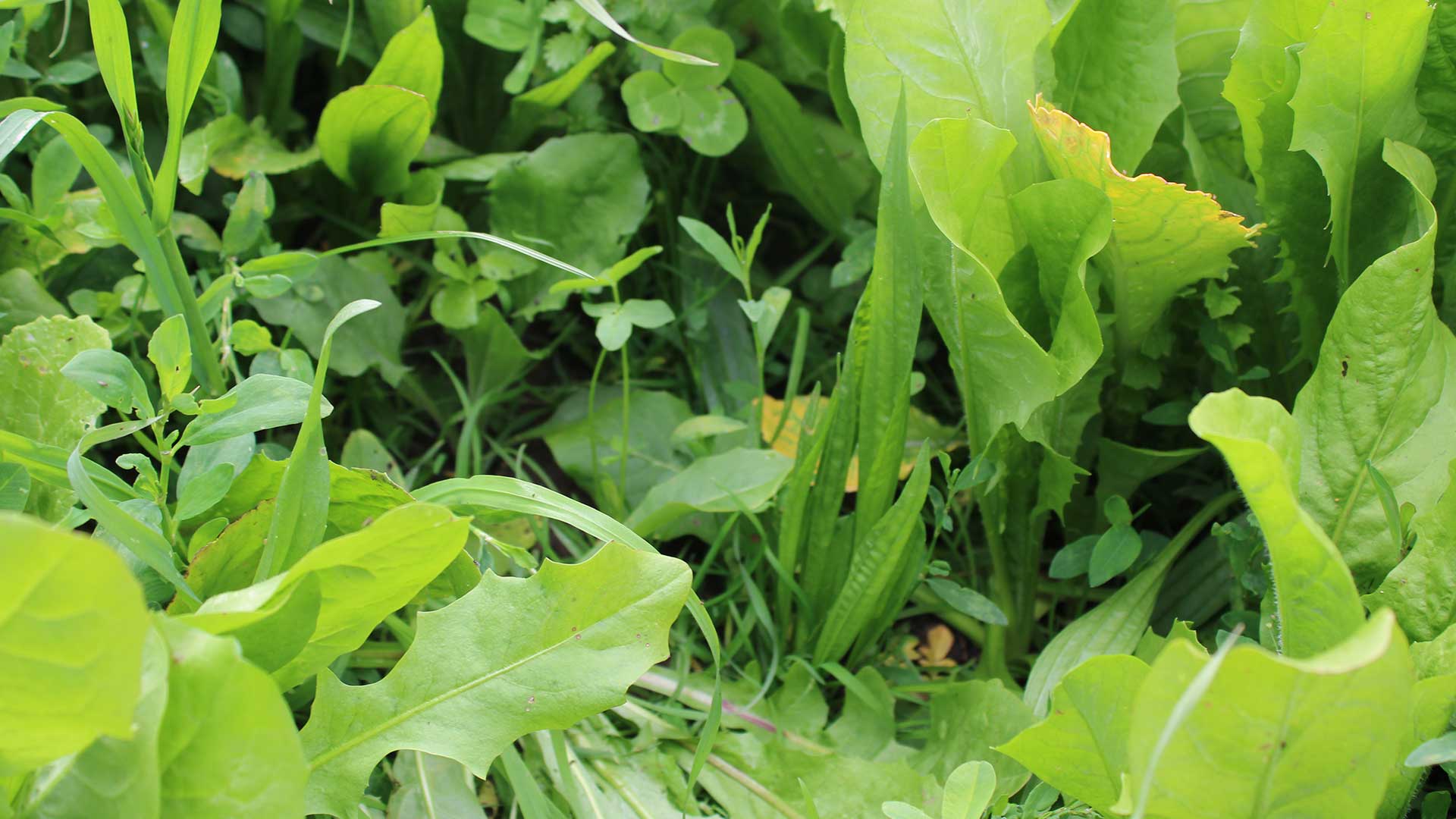
There is plenty of discussion around multi species pastures and regenerative farming, but ultimately a summer forage crop still needs to do its main job – grow useful feed for livestock.
That is the thinking behind our Summer EXTRA Multi Species Blend.
Summer EXTRA combines 14 different forage species, including millet, oats, vetch, clovers, brassicas, chicory, plantain, sunflower, buckwheat and linseed. Each species has a purpose, whether that’s producing feed, fixing nitrogen, providing ground cover or adding greater root and plant diversity.
Here are 10 reasons we like using a diverse multi species seed mix through summer.
Produce quality summer feed
First and foremost, Summer EXTRA is a forage crop.
Shirohie Millet provides the backbone of the blend for summer dry matter production, supported by oats, legumes, brassicas, chicory and plantain.
Rather than growing diversity simply for the sake of it, the objective is to combine diversity with productive, quality grazing.
Spread your seasonal risk
Summer conditions are rarely predictable.
Heat and dry conditions may favour millet and deeper-rooted species, while periods of cooler weather or summer rainfall can favour other components of the blend.
With 14 species in the paddock, we’re not relying on one plant to perform under every condition.
Create different rooting depths
One of the biggest advantages of a multi species seed mix is what’s happening below the ground.
Millet, oats, brassicas, chicory, plantain, sunflower, legumes and the other species all produce different root structures.
This creates greater root diversity and allows plants to explore different depths and areas of the soil profile.
Fix nitrogen with legumes
Summer EXTRA contains a diverse legume component including Popany Vetch, Fenugreek, Reaper Red Clover, Arrowleaf Clover and Crimson Clover.
These legumes can fix atmospheric nitrogen through their association with rhizobia, while also contributing high-quality forage to the grazing mix.
It’s one of the reasons legumes are such an important part of multi species and regenerative farming systems.
Maintain living roots
Living plants mean living roots.
Having a range of species actively growing through the season helps maintain root activity below the soil surface.
Root exudates provide a source of carbon for soil microorganisms, making living roots an important part of supporting soil biology and soil health.
Improve ground cover
Keeping soil covered is particularly valuable heading into warmer weather.
Millet, oats, legumes, brassicas and broadleaf species create different layers within the canopy, helping provide greater ground cover as the crop develops.
Good ground cover can help protect the soil surface from wind, heavy rainfall and direct summer sunlight.
Provide a more diverse livestock diet
Instead of animals grazing a single forage species, Summer EXTRA can provide access to grasses, cereals, legumes, brassicas and herbs within the same paddock.
Each has different characteristics in terms of fibre, protein, digestibility and mineral composition.
The result is a much more diverse grazing opportunity than a traditional single-species summer crop.
Build plant diversity into the rotation
Summer crops provide a great opportunity to introduce species that may not normally be present in a perennial pasture rotation.
Summer EXTRA includes everything from millet and oats through to vetch, clovers, brassicas, chicory, plantain, sunflower, buckwheat and linseed.
That diversity creates different plant structures both above and below the ground and can be a practical way of introducing regenerative farming principles into a productive grazing system.
Add organic matter back into the paddock
Not everything grown needs to disappear down an animal’s throat.
Leaves, stems, roots and grazing residues all contribute organic material back into the system.
With multiple species producing different amounts and types of plant material, a multi species crop can provide both useful livestock feed and valuable residues for the paddock.
Make one paddock do more
This is probably the biggest reason we developed Summer EXTRA.
We’re asking the paddock to do more than simply produce a summer crop.
We want it to grow quality feed, provide ground cover, fix nitrogen, maintain living roots, increase plant and root diversity and contribute organic material back into the soil.
That’s where multi species cropping fits particularly well with regenerative farming.
It doesn’t have to be a choice between productivity and soil health. With the right species and good management, we can work towards both.
Getting started with Summer EXTRA
Summer EXTRA is best sown from mid-spring through to early summer once conditions have warmed and adequate soil moisture is available.
Sowing rate: 35–50 kg/ha
Sowing depth: 10–20 mm
Best suited to: Summer grazing, multi species forage systems and regenerative farming programs.
The blend contains a combination of warm and cool-season species, so what dominates will vary depending on sowing date, soil type, fertility, rainfall and seasonal conditions.
You shouldn’t expect all 14 species to contribute equally every year.
That’s actually part of the strength of the mix.
Different season. Different conditions. Different species get their opportunity to perform.
Gavin Notman
Notman Pasture Seeds
