


Endophytes play a major role in modern perennial ryegrass performance. This guide explains how endophytes work, the differences between standard, low and novel strains, and how choosing the right endophyte influences pasture persistence, insect protection and livestock safety. Understanding endophyte selection helps farmers match pasture genetics to farm conditions and grazing systems.
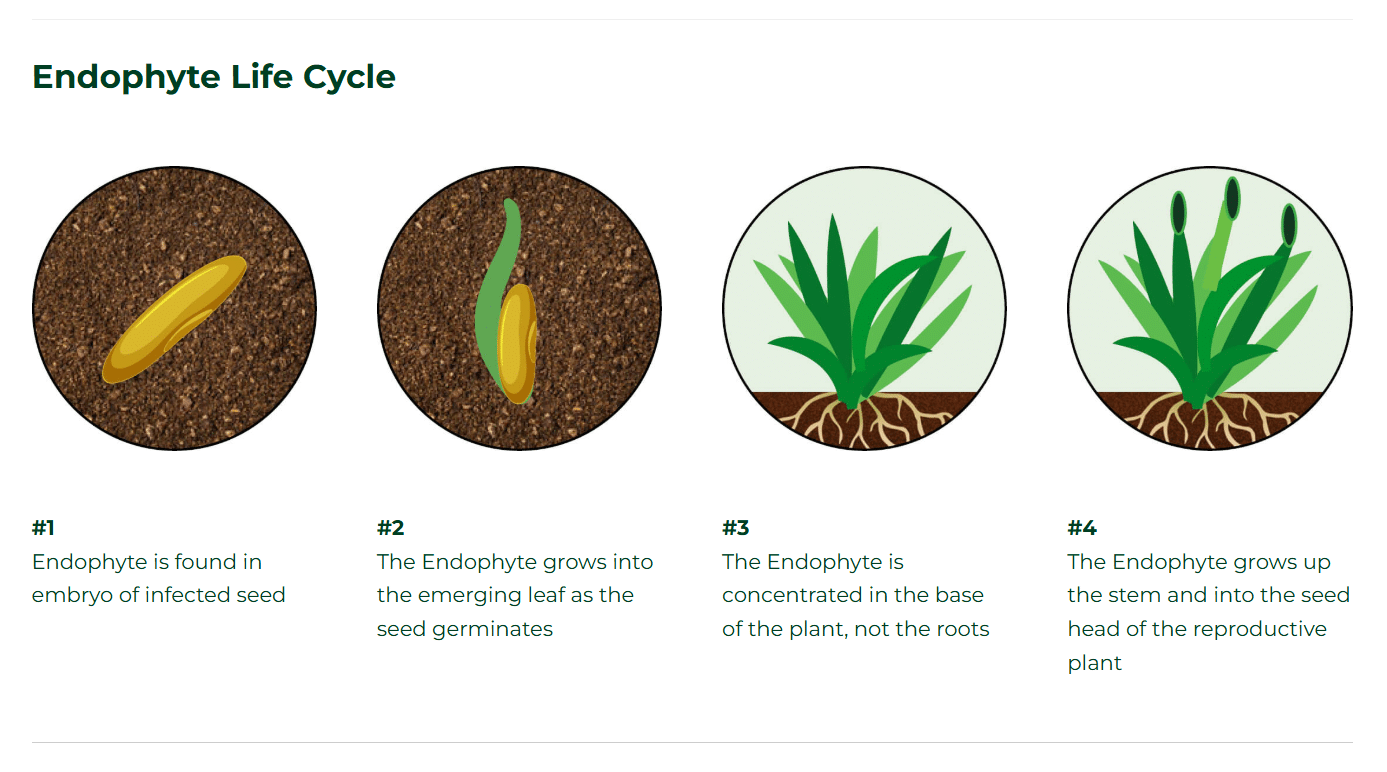
Endophytes are fungi that grow internally within grass plants. Various strains of endophytes are present in many grass cultivars. These fungi produce chemical compounds that help protect plants from a range of insects.
What is an endophyte?
- A fungus living inside the grass plant
- Plant feeds the fungus
- Fungus protects plant from insects
- Modern breeding removes animal health risks
Which Endophyte Should I Choose?
| Farm Situation | Recommended Endophyte | Why |
|---|---|---|
| High insect pressure | CM142, AR37, AR128 | Maximum persistence |
| Animal health priority | CM142 type | Safe grazing |
| Renovation paddock | Premium novel endophyte | Faster pasture recovery |
| Low risk areas | Standard | Lower cost option |
Types of endophytes
There are various types of endophytes: standard, novel and low, each differing in persistence, yield and level of insect protection.
Standard Endophyte
The standard strain indicates that the cultivar contains a naturally occurring wild-type endophyte, which helps resist insect attacks (e.g. Argentine stem weevil and Black Beetle) and prevents over-grazing. However, in dry summer conditions, it may cause ryegrass staggers, heat stress, and reduced animal growth rates. An option where price is crucial and high animal production is not a major issue. Stock grazing these pastures can often suffer from ryegrass staggers and experience reduced weight gains throughout the warmer months.
Low or Nil Endophyte
Low endophyte indicates minimal or no endophyte infection in the seed, making it a great choice for areas with low insect predation and high summer moisture. Nil Endophyte pastures are animal safe and deliver excellent animal performance. However, you can expect less persistence in areas where pasture pests are present. Low endophyte (LE) implies low or nil endophyte infection levels in the seed and its use is best suited to areas of low insect predation generally associated with high summer moisture.
Novel endophytes
New novel strains are currently being developed that may cause ryegrass staggers or may not, but they generally possess some toxicity to specific pasture insects. The effectiveness of these strains varies depending on the specific endophyte and the grass cultivar’s response to it.
Novel endophytes differ in the type and level of alkaloids produced, meaning their performance varies depending on insect pressure, grazing management and seasonal conditions. Some strains prioritise maximum insect protection and persistence, while others place greater emphasis on animal health and production.
Over time, the industry has created a range of endophytes that mitigate animal safety concerns while maintaining a degree of resistance to insect pests, including the CM142, AR37, AR128 and NEA12.
AR1 Endophyte
High animal performance novel endophyte option. Delivers excellent animal performance & provides a moderate range of insect protection. Has demonstrated poor persistence in areas with major insect pest pressure from Black Beetle and Root Aphid.
Endo5 Endophyte
Contains no Lolitrem B, the main cause of ryegrass staggers. Provides good control of Black Beetle, Argentine Stem Weevil, Root Aphid and Pasture Mealy Bug. Produces less ergovaline than many ryegrass cultivars containing standard endophyte. This said, it may produce lower animal performance levels over summer/autumn compared with AR1 and nil endophyte options.
Understanding endophytes
Endophytes exist in a symbiotic relationship where by they are provided the nutrients needed to exist from the plant and in return provide benefits to the host plant such as protection from insect attack.
Endophytes take at least 6-8 weeks to fully establish in newly sown seedlings, so it is important to use other control options to prevent damage to grasses during early establishment. Once grasses are well established with multiple tillers, then you can rely on protection from the endophyte.
Summary
The effectiveness of any endophyte ultimately depends on its interaction with the ryegrass cultivar and how well it matches local farm conditions. Variety selection, insect pressure, grazing intensity and seasonal stress all influence outcomes. For this reason, endophyte choice should be considered alongside cultivar genetics rather than as a separate decision
