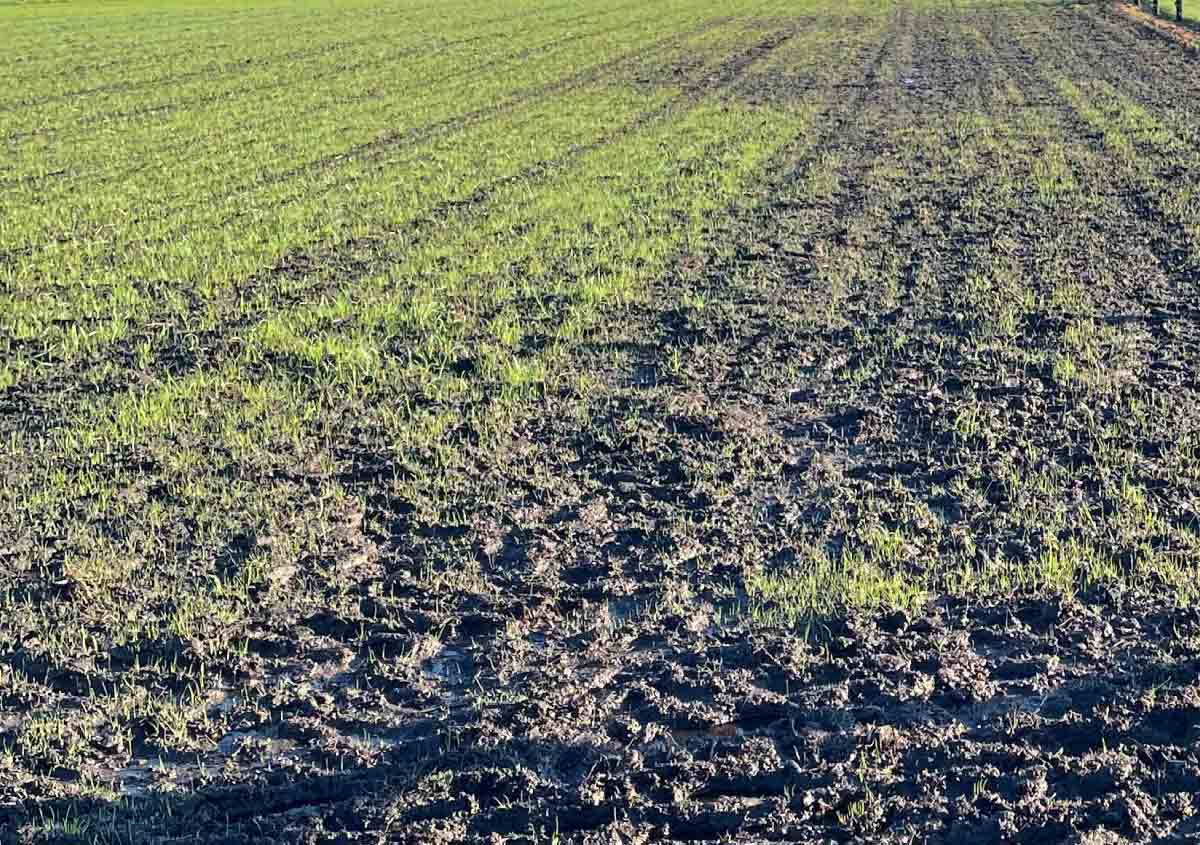


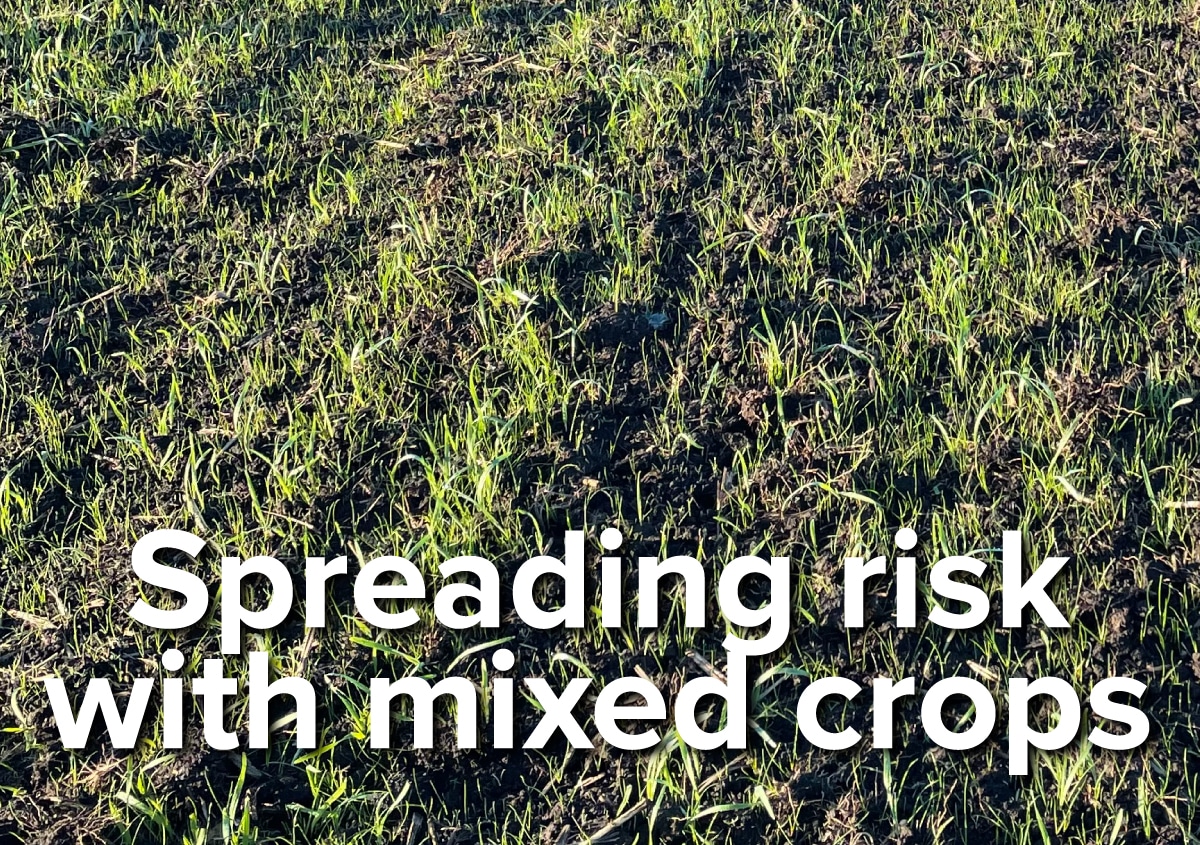
This paddock in South-West Victoria was sown late with a mix of oats and annual ryegrass. While oat establishment has been disappointing in places, the annual ryegrass has established strongly and is now carrying much of the crop.
Every season presents different establishment challenges. Wet soils, delayed sowing, cold temperatures or dry finishes can all influence how individual species like oats and annual ryegrass perform. That’s why mixing these two species, especially the annual ryegrass to an oat, can add an insurance layer to your paddock.
You can clearly see the annual ryegrass filling gaps where oat numbers are lower. While early strike was good, the oat establishment has been patchy across parts of the paddock due to subsequent waterlogging events. In a positive, the annual ryegrass emerged consistently and is now making up much of the bulk ground cover.
Rather than relying on a single species such as just oats, the annual ryegrass provided a level of insurance when seasonal conditions didn’t favour optimum oat establishment. Mixed crops don’t guarantee a better result every season, but they can provide greater resilience when establishment conditions favour one species over another.
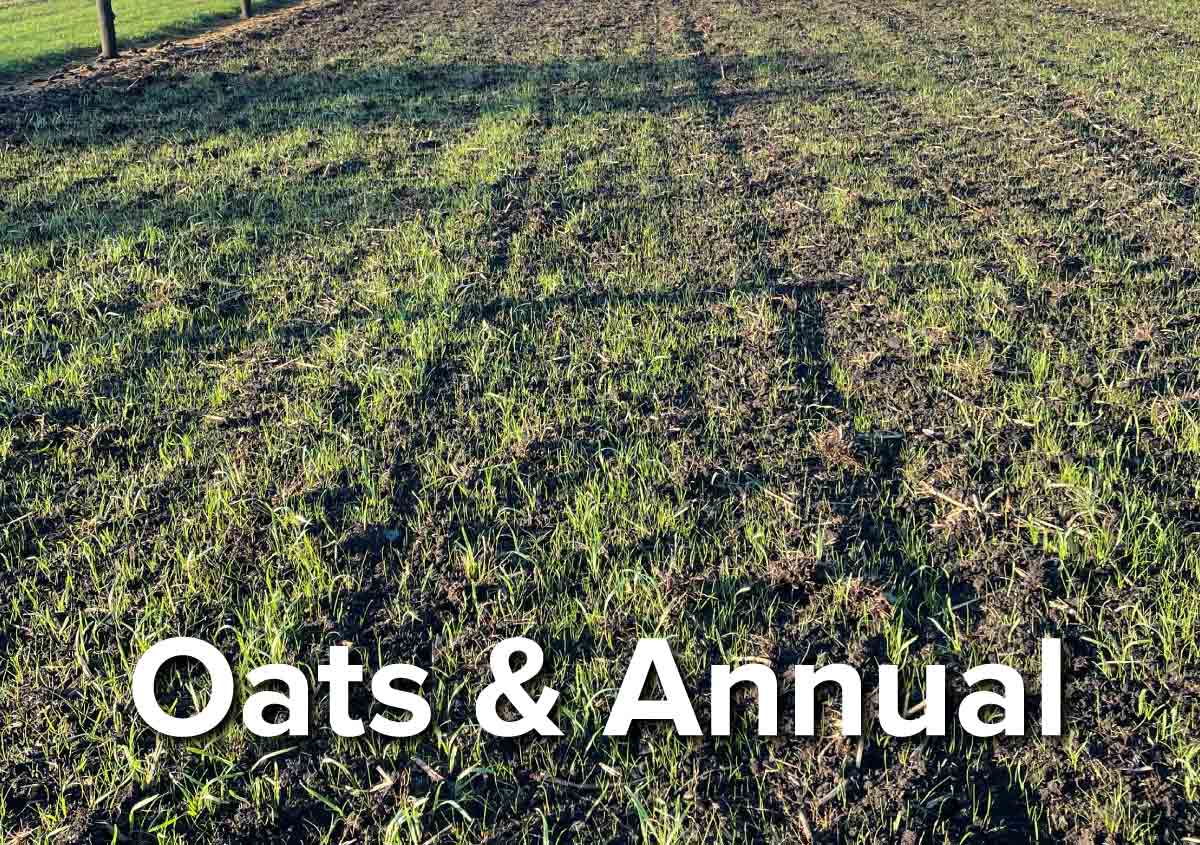
Saturated soils impacting cereals like oats
Saturated soils reduce oxygen around germinating seed and can affect emergence. Larger-seeded species such as oats are often more susceptible to prolonged waterlogging during establishment. Annual ryegrass can sometimes recover more evenly following difficult sowing conditions, helping maintain plant numbers across the paddock.
Adaptable WinterCrop seed mixes
Off the shelf we have a number of standard annual & oat WinterCrop mixes – and if needing a custom mix we can build that for you to. These mixes include:
Late feed option: Rampage Annual Ryegrass (25%) + Late Season Oats (75%) sown at 80kg/ha
Early feed option: Ed MAX Annual Ryegrass (25%) + Early Season Oats (75%) sown at 80kg/ha
Looking to spring
As the winter progresses there won’t be a whole lot taking from this paddock, however the annual ryegrass has the capacity to tiller up, increasing ground cover and contributing significant feed to the areas that the cereal likely won’t be able to add much value to.
We’ll continue monitoring this paddock throughout the season to see how the crop develops and how the annual ryegrass compensates for the lower oat population.
Building resilience into forage systems – winter and summer
Building resilience into a forage program means spreading seasonal risk across multiple species throughout the year. In winter, when wanting to grow specialist bulk crops, combinations such as annual ryegrass and oats provide a balance of early bulk and extended production if one species establishes better than the other.
Likewise during summer, mixes including millet and forage rape offer the same advantage, combining quick growth, high-quality feed and improved resilience to changing seasonal conditions. By using complementary species year-round, farmers can reduce risk, maintain feed supply and build more reliable forage systems regardless of what the season delivers.
Check out more on our summer Top Crop blends here
Lessons from this paddock
- Waterlogging doesn’t affect every species equally.
- Mixed crops reduce the risk of a poor establishment from one species.
- Give annual ryegrass time to tiller before judging final production.