


Editorial by Jason Hibbs. Gippsland team.
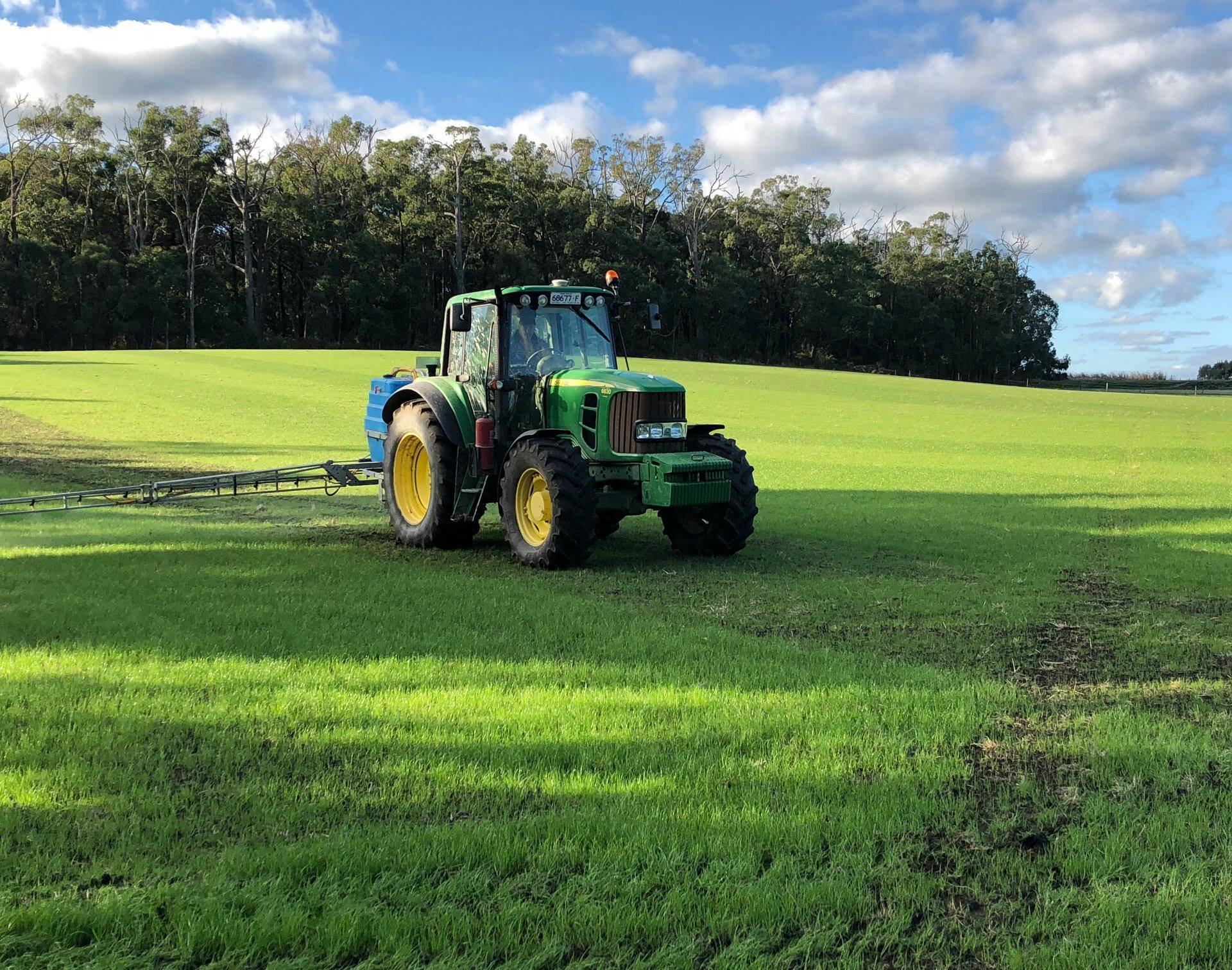
May is one of the most important months for pasture weed control and winter feed planning. Pastures are actively growing, weeds are small and vulnerable, and soil temperatures are still warm enough to achieve strong herbicide performance.
Top suggestions
- Spray early while weeds are small and actively growing for better control and lower cost
- Ask us about matching chemistry to pasture type, weed spectrum and clover requirements
- Use deep penetrating adjuvants to improve herbicide penetration into weeds
- Combine weed control with plant mobilisation products like Amino Boss or Accelerate to drive winter feed growth
Getting on top of weeds early not only improves pasture quality and utilisation through winter, but also protects clover content, pasture establishment and overall feed production potential.
1. Spray weeds early — not when they become a problem
Early intervention generally means:
- Better herbicide efficacy
- Lower weed pressure through winter
- Reduced need for aggressive follow-up spraying
- Better clover and ryegrass establishment
Products such as 2,4-D Amine 625, MCPA 750 and Thistrol Gold can be matched to pasture stage and weed spectrum.
2. Match chemistry to your pasture – Not a weak one
One of the biggest mistakes in autumn spraying is using a weak chemistry for the pasture situation.
If clover preservation is important, softer options such as low rates of MCPA or Flumetsulam 800WG may be more suitable than stronger phenoxy programs like 2,4-D Amine.
For tougher broadleaf weeds or enhanced burn-down, adding Carfentrazone 400 into tank mixes can improve speed and visual results.
3. Adjuvants still matter in autumn
Cooler temperatures, waxier leaves and stressed weeds can reduce herbicide uptake during autumn.
That is why quality adjuvants and spray oils still play an important role in maintaining spray performance.
Trouper Spray Oil helps improve:
- Herbicide penetration
- Leaf coverage
- Uptake into harder-to-kill weeds
- Overall spray consistency
Especially when conditions become cooler and weed growth slows, the right adjuvant can make a noticeable difference to final control.
4. Think beyond weed control — drive winter growth too
Autumn spraying also presents a good opportunity to stimulate pasture growth and plant recovery.
Targeted foliar nutrition and gibberellic acid programs can help mobilise plant growth heading into winter, particularly when moisture and fertility are adequate.
Products such as:
- Accelerate 200 Gibberellic Acid
- Amino Boss Pasture
- Root Growth Formula
can assist with:
- Faster leaf response
- Root activity
- Nutrient uptake
- Winter feed production
This approach fits well following grazing rotations or where farms are trying to build feed quickly ahead of winter deficits.
